William Wilberforce: The Bible That Fuelled an Abolitionist

William Wilberforce spent 46 years in Parliament fighting to end the British slave trade. His secret weapon was not political strategy — it was a deep, personal conviction rooted in Scripture. Here is the story of the man and the Book behind him.
On 26 July 1833, three days before William Wilberforce died, he received word that the Slavery Abolition Act had passed its third reading in the British Parliament. "Thank God," he said, "that I should have lived to witness a day in which England is willing to give twenty millions sterling for the abolition of slavery." He died on 29 July.
The bill he had devoted his life to — the one that would free over 800,000 enslaved people across the British Empire — became law one month later.
Wilberforce is remembered as a political hero. He was also, and more fundamentally, a man whose faith drove every dimension of his public life. To understand the campaign, you must understand the conversion.
The Conversion
William Wilberforce was born in Hull, England, in 1759, into a prosperous merchant family. He was sent to Cambridge and entered Parliament at 21 — young, charming, entertaining, and a close friend of Prime Minister William Pitt the Younger. He was, by his own later account, entirely absorbed in ambition and pleasure.
Between 1784 and 1786, Wilberforce underwent a dramatic conversion to evangelical Christianity, influenced partly by his childhood exposure to the Methodist preacher George Whitefield and partly by a sustained reading of the New Testament on a journey through Europe with his friend Isaac Milner.
What he found in the New Testament disturbed him. He wrote in his diary: "I was filled with sorrow. I am sure that no human creature could suffer more than I did for some months." The realisation that he had lived entirely for himself while claiming to be a respectable English gentleman was devastating.
He considered leaving Parliament to enter the ministry. His friend John Newton — the former slave-ship captain who wrote "Amazing Grace" — talked him out of it. "God has raised you up for the good of his church and for the good of the nation," Newton told him. "Maintain your friendship with Pitt, continue in Parliament."
The Cause
In 1787, Wilberforce met Thomas Clarkson, an abolitionist campaigner who presented him with documented evidence of the horrors of the Middle Passage — the transatlantic crossing on which enslaved Africans were packed into ships with lethal density. Wilberforce was already troubled by what he had learned. This sealed it.
He wrote in his diary on 28 October 1787: "God Almighty has set before me two great objects, the suppression of the slave trade and the reformation of manners." He would spend the rest of his life on both.
The biblical foundations of his opposition to slavery were explicit and personal. He rejected the pro-slavery use of the "curse of Ham" (Genesis 9:25) as a justification for African enslavement, noting that the text nowhere authorises the kidnapping, transatlantic transport, and forced labour of millions of people. He drew instead on Acts 17:26 ("of one blood" — all nations made from one human ancestor) and on the principles of love for neighbour that ran through both Testaments.
"So much misery condensed in so little room is more than the human imagination had ever before conceived." — William Wilberforce, speaking in Parliament, 1789
Forty-Six Years
The fight was not quick. Wilberforce first introduced his motion to abolish the slave trade in 1789. It was defeated. He introduced it again every year for eighteen years, against the combined lobbying power of the West India merchants, plantation owners, and those who argued that British economic prosperity depended on the trade.
He was subjected to threats, ridicule, and social ostracism. He was physically frail throughout his life — suffering from ulcerative colitis so severe that his doctors twice warned him he would die. He took opium, the standard treatment of the day, to manage the pain. He suffered several breakdowns.
Through it all, he returned to Scripture. His close friendship with the members of the Clapham Sect — an informal evangelical community that included Henry Thornton, Hannah More, and Zachary Macaulay — meant he was constantly surrounded by people who held him accountable both spiritually and strategically.
In 1807, after an eighteen-year campaign, the British Parliament voted to abolish the slave trade by 283 votes to 16. Wilberforce wept. But trading in enslaved people was not the same as freeing those already enslaved. He turned his attention to total emancipation.
The Legacy
The Slavery Abolition Act of 1833 applied to most of the British Empire. The United States would not abolish slavery for another thirty-two years. Wilberforce's campaign was singular in world history: no major slave-trading nation had ever voluntarily dismantled the institution before.
His driving conviction was one the Scriptures had pressed into him: that every human being was made in the image of God, that every human being was the object of Christ's atoning death, and that no economic calculation could override those two facts.
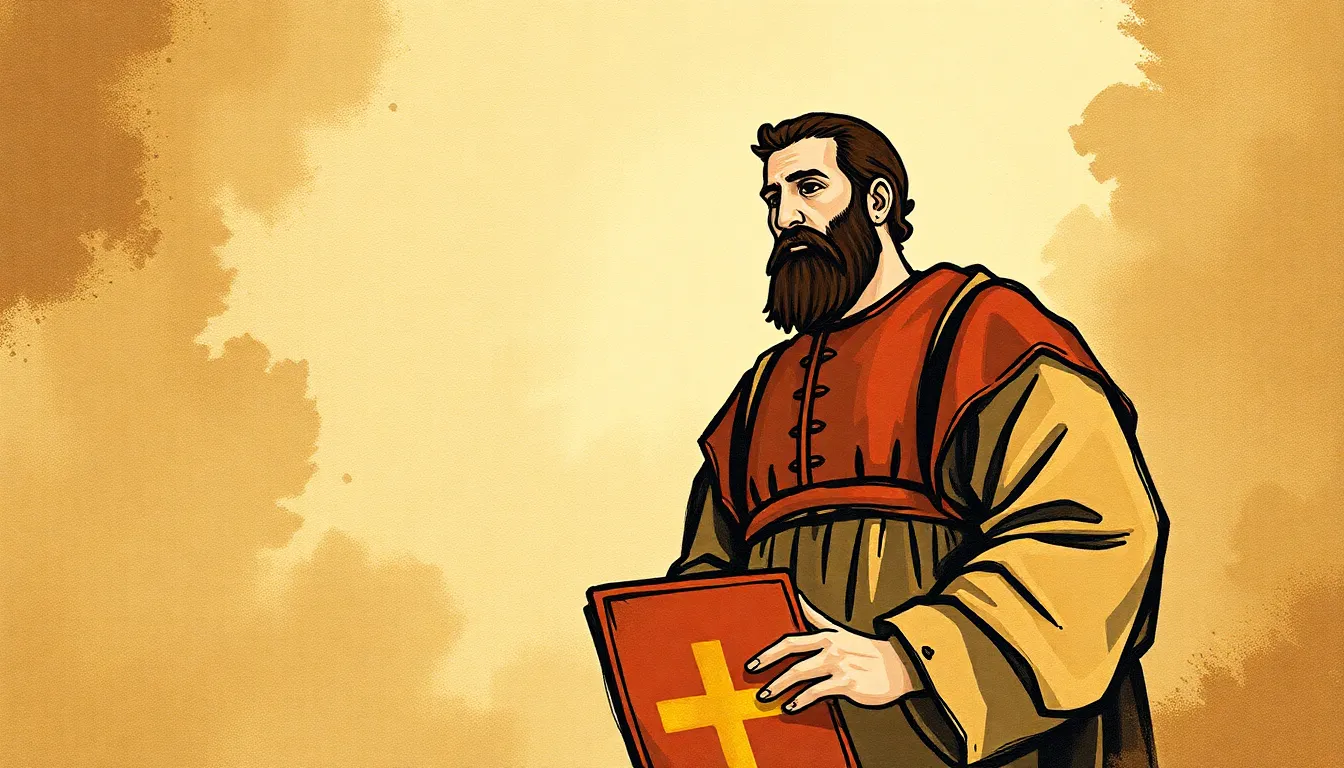
The Bible he carried into Parliament was not a prop. It was the engine of the longest, most costly campaign of his life. That is the most important thing to understand about Wilberforce: his activism was not despite his faith. It was because of it.
Reflection: Is there an injustice in your community or country that your faith is calling you to address? What would it look like to take the long view, as Wilberforce did, and commit to decades of faithful work rather than quick results?
Ready to test your knowledge?
Put what you've read into practice with a Bible quiz — free for every believer.
Build a daily reading habit
Follow a structured plan through the whole Bible — track your progress, day by day.
El Shamarani
Gospel Genius Contributor
Gospel Genius is a Bible knowledge platform helping Christians grow deeper in Scripture through quizzes, daily devotions, reading plans, and study resources. Our contributors are believers passionate about making God's Word accessible to every person.
Learn more about Gospel Genius →