William Tyndale: The Man Who Died So You Could Read Your Bible
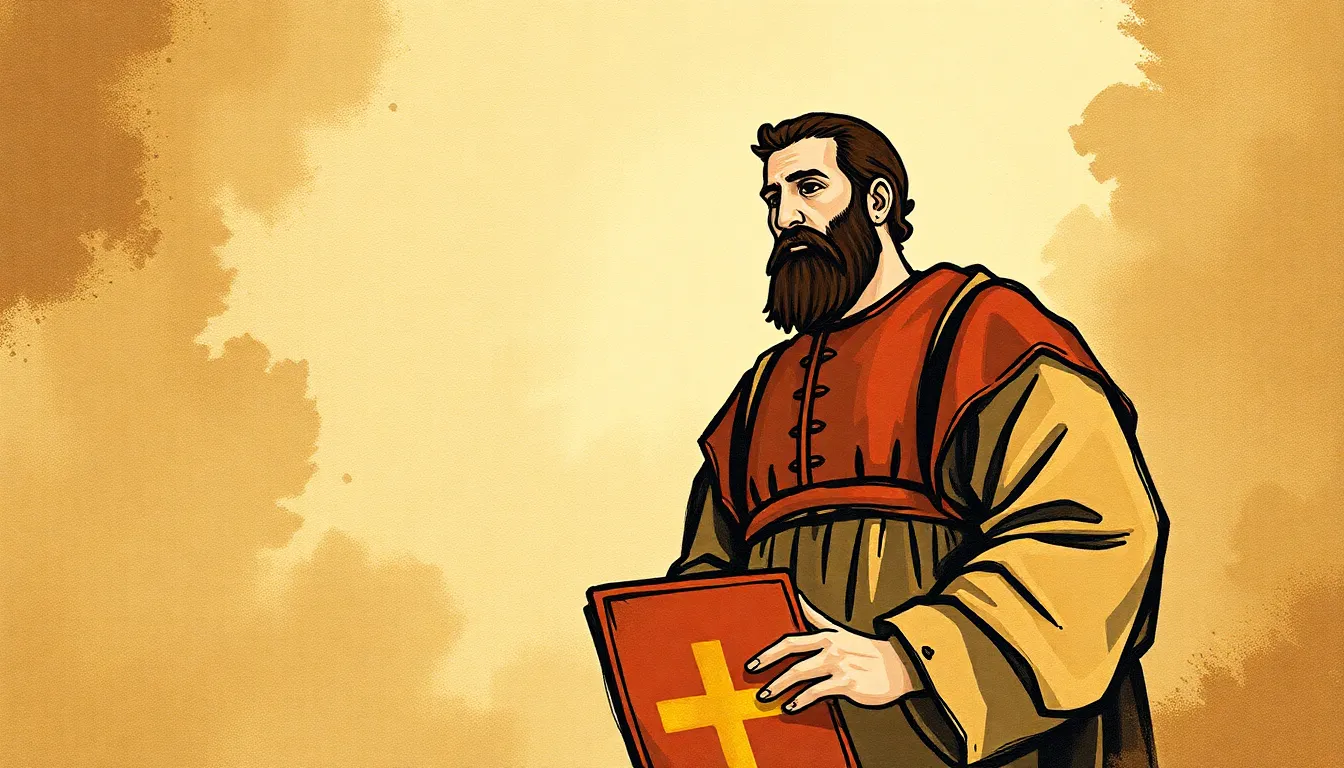
When William Tyndale declared that a ploughboy would one day know the Scriptures better than the Pope, it was considered dangerous. He was executed for making it come true.
A Church That Kept the Bible in Latin
In the early sixteenth century, the Roman Catholic Church conducted its services in Latin — a language that only the educated clergy could read. The Bible was not available in English. Possession of an English Bible was, in many cases, illegal. The church's position was that Scripture required expert interpretation — that ordinary people reading it without guidance would fall into error.
William Tyndale looked at this and saw something different. Educated at both Oxford and Cambridge, fluent in eight languages, and convinced that the Word of God was meant for every person, he announced his intention to translate the Bible into English. The church hierarchy refused to support him. He fled England in 1524 and never returned.
The Ploughboy Promise
Tyndale reportedly told a clerical opponent: "If God spare my life, ere many years I will cause a boy that driveth the plough to know more of the Scripture than thou dost." This was not empty bravado — it was a theological conviction. The Reformation's central claim was that Scripture alone (sola scriptura) was the supreme authority for Christian life and faith. But that claim was meaningless if ordinary people could not access Scripture in their own language.
Working from the Greek New Testament (Erasmus's edition) and later Hebrew texts, Tyndale produced the first printed English New Testament in 1526. Copies were smuggled into England in bales of cloth and barrels of merchandise. Bishops bought them up to burn them — inadvertently funding Tyndale's ability to print more. One bishop reportedly bought so many that Tyndale could afford to translate the Old Testament.
The Quality of His Work
Tyndale was not merely courageous — he was brilliant. His translations possessed a clarity, rhythm, and directness that shaped the English language permanently. When the King James Bible was produced in 1611 by a committee of scholars, they preserved roughly eighty-three percent of Tyndale's New Testament translation. Phrases we still use daily — "the powers that be," "my brother's keeper," "a law unto themselves," "the salt of the earth" — all come from Tyndale.
Betrayed and Burned
In 1535, Tyndale was betrayed by a man he had befriended, Henry Phillips, who lured him out of his safe house in Antwerp and delivered him to imperial authorities. He was imprisoned in Vilvoorde Castle for over a year, charged with heresy and spreading Lutheran ideas.
On 6 October 1536, Tyndale was strangled at the stake and then burned. His last recorded words were a prayer: "Lord, open the King of England's eyes."
Within two years, Henry VIII — the very king who had authorised Tyndale's arrest — ordered that an English Bible be placed in every church in England.
The prayer was answered. The ploughboy got his Bible. And we still read it today.
Ready to test your knowledge?
Put what you've read into practice with a Bible quiz — free for every believer.
Build a daily reading habit
Follow a structured plan through the whole Bible — track your progress, day by day.
El Shamarani
Gospel Genius Contributor
Gospel Genius is a Bible knowledge platform helping Christians grow deeper in Scripture through quizzes, daily devotions, reading plans, and study resources. Our contributors are believers passionate about making God's Word accessible to every person.
Learn more about Gospel Genius →