Portrait of Faith: Bishop Matthew Hassan Kukah — Prophet, Pastor, and Voice of the Voiceless
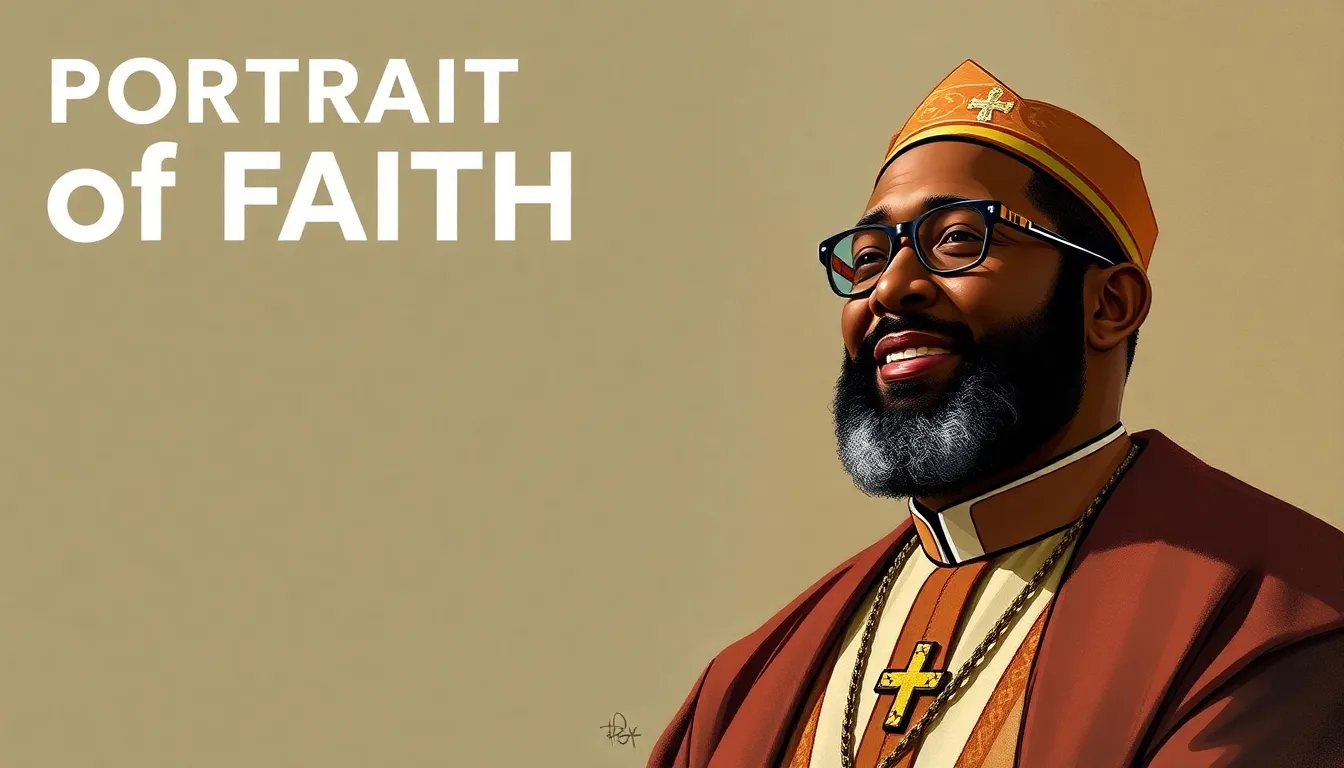
He has stood at pulpits and podiums, challenged presidents and held fast to the Gospel. Bishop Matthew Hassan Kukah is not the most famous name in Nigerian Christianity — but he may be one of its most consequential.
There is a kind of courage that does not shout. It reasons, grieves, and speaks — and in doing so, unsettles the powerful more than any protest ever could. That is the courage of Bishop Matthew Hassan Kukah, Catholic Bishop of Sokoto, one of the most clear-eyed Christian voices in twenty-first century Nigeria.
From Anchuna to the Altars of Power
Kukah was born in 1952 in Anchuna, a small village in what is now Kaduna State — the predominantly Muslim north of Nigeria. Growing up in a region where Christians were a minority, he understood from boyhood what it meant to live faith in contested space. He entered the Catholic priesthood through the Society of St. Patrick (Kiltegan Fathers), an Irish missionary order, and was ordained in 1976.
After ordination, he pursued postgraduate studies in sociology at the University of London and later earned a doctorate from SOAS. His academic rigour became one of his greatest weapons — not for theological combat, but for the hard work of speaking truth to power with precision and care.
Religion and Power in Nigeria
Kukah served as Secretary of the National Political Reform Conference in 2005 and the Presidential Advisory Committee on National Dialogue in 2009. His books — most notably Religion, Politics and Power in Northern Nigeria (1993) — established him as a leading scholar of religion and public life in Africa. He has consistently refused to be co-opted by any political faction, earning both admiration and resentment.
His Christmas and Easter homilies have become annual events of national significance. In 2020, his Christmas message accusing President Buhari's administration of ethnoreligious nepotism sparked one of the most heated public debates in Nigerian Christianity that year.
Appointed to Sokoto
In 2011, Pope Benedict XVI appointed Kukah as Bishop of the Catholic Diocese of Sokoto — the seat of the Sultan of Sokoto, spiritual leader of Nigeria's Muslims. His friendship with Sultan Sa'ad Abubakar III has demonstrated that Christian-Muslim relations in the north need not be defined by suspicion and bloodshed.
Together, they founded the Kukah Centre in Abuja in 2017, a non-partisan think tank dedicated to justice, peace, and accountable governance. The Centre has become a convening space for young Nigerians across faith lines.
A Theology of Human Dignity
At the heart of Kukah's theology is a conviction rooted in Catholic social teaching: that the dignity of every human being is non-negotiable, and that any government — or church — that tramples on that dignity has forfeited its claim to moral authority. He has been a consistent critic of state violence against civilians in the northeast and northwest, of the impunity of the powerful, and of the church's own temptation to align with the wealthy against the poor.
Ecumenism as Practice
Kukah has been one of the most consistent advocates for genuine ecumenism in Nigeria — not the polite mutual toleration that often passes for unity, but the hard work of sitting together across traditions to serve the common good. He has spoken at Pentecostal gatherings, collaborated with the Christian Association of Nigeria (which includes all traditions), and maintained relationships with Protestant, Anglican, and evangelical leaders across the country.
Legacy and Witness
Bishop Kukah has been decorated with Nigeria's national honour, the Commander of the Order of the Niger, and has received honorary doctorates from universities across the world. But what defines him is the man who, in the shadow of Boko Haram's terror, drove north to comfort terrified congregations — who has said, repeatedly, that Nigeria is worth saving, and has put his life in service of that belief.
In a Christianity often seduced by success and spectacle, Kukah's witness is a different kind of power: the power of a clear conscience, a sharp mind, and a heart that refuses to stop breaking over the suffering of ordinary people.
"The Church does not have power. The Church is power. And it uses that power on behalf of the powerless."
— Bishop Matthew Hassan Kukah
Ready to test your knowledge?
Put what you've read into practice with a Bible quiz — free for every believer.
Build a daily reading habit
Follow a structured plan through the whole Bible — track your progress, day by day.
El Shamarani
Gospel Genius Contributor
Gospel Genius is a Bible knowledge platform helping Christians grow deeper in Scripture through quizzes, daily devotions, reading plans, and study resources. Our contributors are believers passionate about making God's Word accessible to every person.
Learn more about Gospel Genius →