Fasting in the Bible: What It Is, What It Isn't, and Why It Works
By Gospel Genius Editorial Team
4 min read
101 views
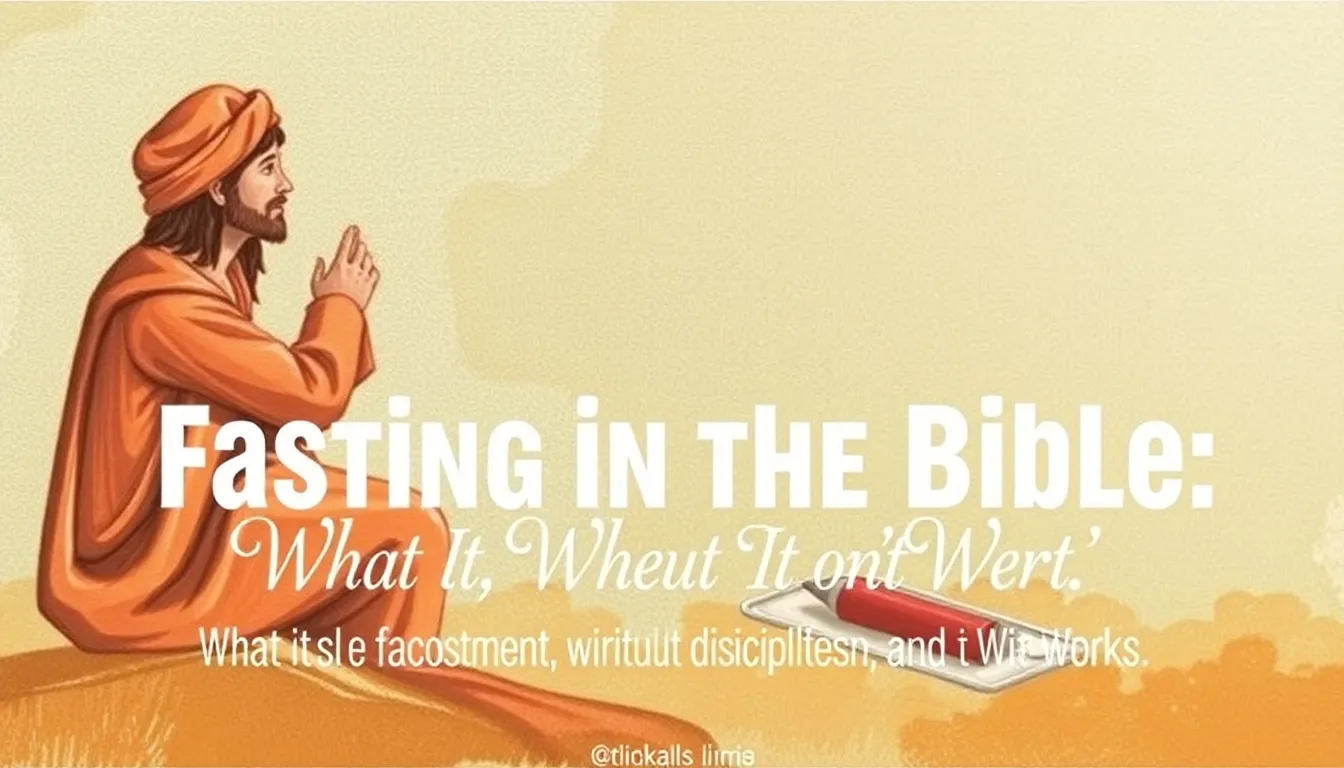
Fasting is one of the most consistently practised disciplines in Scripture. Here is a clear-eyed look at what it is, what it isn't, and why it matters.
Ask ten Christians about fasting and you will get ten different answers. Some fast regularly and speak about it with deep conviction. Others have tried it once and given up. Many have never fasted at all, vaguely aware that it is something they should probably do. A smaller group avoids it completely on the grounds that it sounds like works-righteousness or asceticism.
All of these responses miss something. Fasting is one of the most consistently practised spiritual disciplines in the Bible, endorsed by Jesus himself — and it is worth taking seriously.
**Fasting in the Old Testament**
The Old Testament records fasting in connection with mourning, repentance, intercession, and seeking God's guidance. Moses fasted forty days on Mount Sinai (Exodus 34:28). David fasted when his child was sick (2 Samuel 12:16). Ezra fasted and prayed before the dangerous journey back to Jerusalem from Babylon (Ezra 8:21-23). Esther called a three-day fast before approaching the king (Esther 4:16). Nehemiah fasted when he heard of Jerusalem's ruined walls (Nehemiah 1:4).
The Day of Atonement — Yom Kippur — was the one mandatory fast in the Mosaic calendar, when Israel "afflicted their souls" before God in national repentance (Leviticus 16:29-31). By the time of the Second Temple, additional fasts had been added to the Jewish calendar.
**What Jesus Said**
Jesus assumed his disciples would fast. Not "if you fast" but "when you fast" (Matthew 6:16). He warned against doing it publicly as a performance of piety — "they disfigure their faces, that they may appear unto men to fast" — and instructed his disciples to fast privately, without fanfare. He compared himself to a bridegroom: his presence with the disciples was cause for celebration, not fasting. But when the bridegroom is taken away, "then shall they fast in those days" (Mark 2:20). This means the era of the Church — the time between the ascension and the return of Christ — is precisely the season for fasting.
**What Fasting Is Not**
It is worth clearing away several misunderstandings.
Fasting is not a hunger strike designed to change God's mind. God is not a reluctant deity who must be persuaded by physical suffering to grant what he otherwise would withhold. Fasting does not earn anything.
It is not primarily a diet or a detox practice. The physical benefits of intermittent fasting are real, and they can accompany Christian fasting — but they are not the point. Fasting that is primarily about health and incidentally about spirituality is not biblical fasting.
It is not exclusively abstinence from food. Some forms of fasting involve abstaining from other things — social media, entertainment, sexual intimacy within marriage (by mutual consent, per 1 Corinthians 7:5). The essential character of fasting is voluntary self-denial for the purpose of seeking God more intensely.
**What Fasting Actually Does**
When you fast from food, your body notices. Hunger is uncomfortable and distracting. This discomfort can become a useful signal: every time you feel hunger, you are reminded to pray. The empty stomach becomes a kind of prayer alarm, repeatedly redirecting your attention toward God. This is why fasting and prayer are almost always linked in Scripture — fasting is not a substitute for prayer, but an intensification of it.
Fasting also confronts us with our own control issues. Food is one of the most basic comforts of human existence. Choosing to go without it — even briefly — is an act of submission that says: my body does not rule my spirit, and my appetites do not define my priorities. This is why Paul, in 1 Corinthians 9:27, talks about bringing his body under subjection — the same verb used for an athlete's disciplined training.
**Getting Started**
If you have never fasted, begin small. A skipped lunch and an extended midday prayer time. A one-day fast from sunrise to sunset with water. Work up to extended fasts prayerfully and carefully, and if you have medical conditions, consult a doctor first.
The goal is not suffering for its own sake. The goal is clarity — the clearing away of the noise of appetite so that the voice of God can be heard more distinctly. "Is not this the fast that I have chosen?" God asks in Isaiah 58 — and his answer is a fast that leads not just to personal spiritual intensity but to justice, mercy, and care for the poor. Biblical fasting is never merely private. It always reaches outward.
All of these responses miss something. Fasting is one of the most consistently practised spiritual disciplines in the Bible, endorsed by Jesus himself — and it is worth taking seriously.
**Fasting in the Old Testament**
The Old Testament records fasting in connection with mourning, repentance, intercession, and seeking God's guidance. Moses fasted forty days on Mount Sinai (Exodus 34:28). David fasted when his child was sick (2 Samuel 12:16). Ezra fasted and prayed before the dangerous journey back to Jerusalem from Babylon (Ezra 8:21-23). Esther called a three-day fast before approaching the king (Esther 4:16). Nehemiah fasted when he heard of Jerusalem's ruined walls (Nehemiah 1:4).
The Day of Atonement — Yom Kippur — was the one mandatory fast in the Mosaic calendar, when Israel "afflicted their souls" before God in national repentance (Leviticus 16:29-31). By the time of the Second Temple, additional fasts had been added to the Jewish calendar.
**What Jesus Said**
Jesus assumed his disciples would fast. Not "if you fast" but "when you fast" (Matthew 6:16). He warned against doing it publicly as a performance of piety — "they disfigure their faces, that they may appear unto men to fast" — and instructed his disciples to fast privately, without fanfare. He compared himself to a bridegroom: his presence with the disciples was cause for celebration, not fasting. But when the bridegroom is taken away, "then shall they fast in those days" (Mark 2:20). This means the era of the Church — the time between the ascension and the return of Christ — is precisely the season for fasting.
**What Fasting Is Not**
It is worth clearing away several misunderstandings.
Fasting is not a hunger strike designed to change God's mind. God is not a reluctant deity who must be persuaded by physical suffering to grant what he otherwise would withhold. Fasting does not earn anything.
It is not primarily a diet or a detox practice. The physical benefits of intermittent fasting are real, and they can accompany Christian fasting — but they are not the point. Fasting that is primarily about health and incidentally about spirituality is not biblical fasting.
It is not exclusively abstinence from food. Some forms of fasting involve abstaining from other things — social media, entertainment, sexual intimacy within marriage (by mutual consent, per 1 Corinthians 7:5). The essential character of fasting is voluntary self-denial for the purpose of seeking God more intensely.
**What Fasting Actually Does**
When you fast from food, your body notices. Hunger is uncomfortable and distracting. This discomfort can become a useful signal: every time you feel hunger, you are reminded to pray. The empty stomach becomes a kind of prayer alarm, repeatedly redirecting your attention toward God. This is why fasting and prayer are almost always linked in Scripture — fasting is not a substitute for prayer, but an intensification of it.
Fasting also confronts us with our own control issues. Food is one of the most basic comforts of human existence. Choosing to go without it — even briefly — is an act of submission that says: my body does not rule my spirit, and my appetites do not define my priorities. This is why Paul, in 1 Corinthians 9:27, talks about bringing his body under subjection — the same verb used for an athlete's disciplined training.
**Getting Started**
If you have never fasted, begin small. A skipped lunch and an extended midday prayer time. A one-day fast from sunrise to sunset with water. Work up to extended fasts prayerfully and carefully, and if you have medical conditions, consult a doctor first.
The goal is not suffering for its own sake. The goal is clarity — the clearing away of the noise of appetite so that the voice of God can be heard more distinctly. "Is not this the fast that I have chosen?" God asks in Isaiah 58 — and his answer is a fast that leads not just to personal spiritual intensity but to justice, mercy, and care for the poor. Biblical fasting is never merely private. It always reaches outward.
Ready to test your knowledge?
Put what you've read into practice with a Bible quiz — free for every believer.
Build a daily reading habit
Follow a structured plan through the whole Bible — track your progress, day by day.
Tags:
fasting
prayer
spiritual disciplines
Christian living
Old Testament
New Testament
G
Gospel Genius Editorial Team
Gospel Genius Contributor
Gospel Genius is a Bible knowledge platform helping Christians grow deeper in Scripture through quizzes, daily devotions, reading plans, and study resources. Our contributors are believers passionate about making God's Word accessible to every person.
Learn more about Gospel Genius →