The 7 Covenants of the Bible: God's Unfolding Story
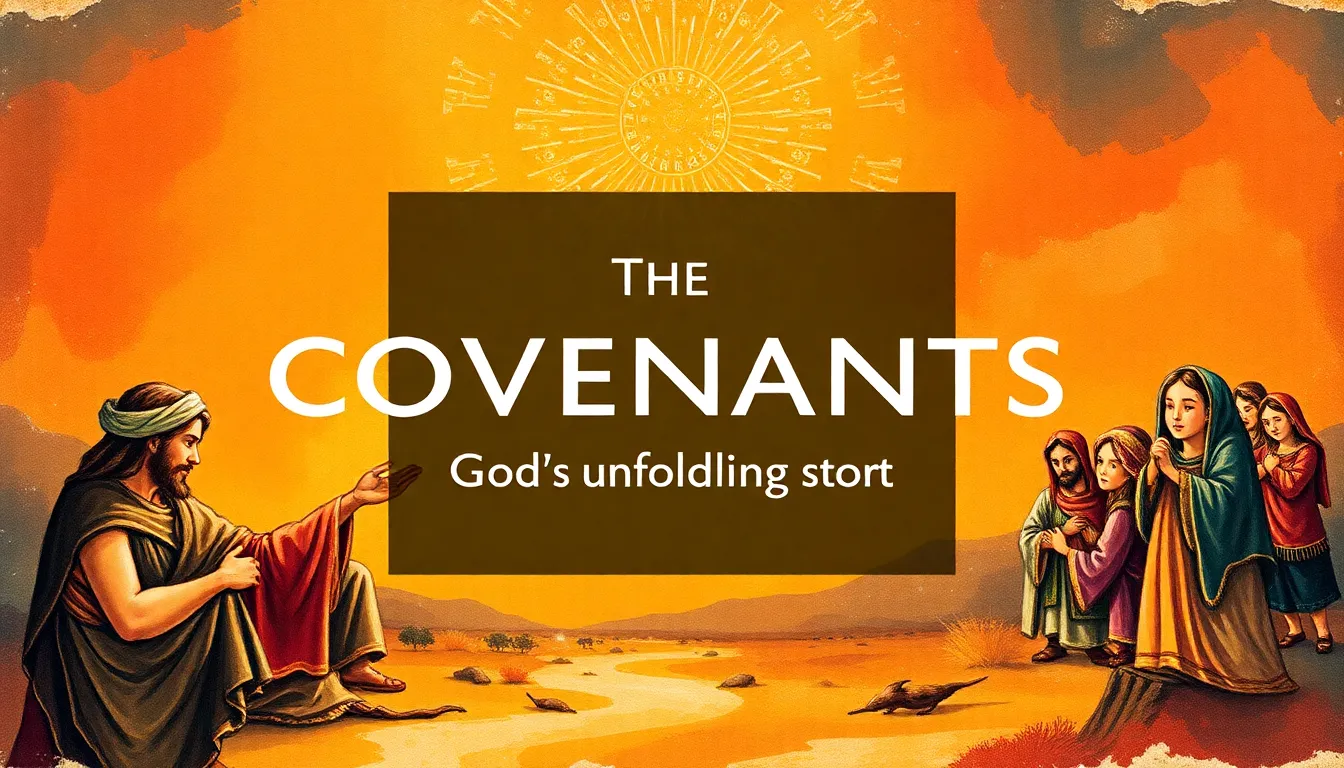
From Eden to Eternity, the seven covenants of the Bible trace God's unfolding plan for humanity — each one revealing more of who he is and what he intends to do.
**What Is a Covenant?**
In the ancient Near East, a covenant (Hebrew: *berith*) was far more than a contract. Contracts are about services and payment. Covenants are about relationship. They bound parties together with obligations, promises, and consequences — and were often ratified with blood, sacrifice, or a shared meal. When God makes covenants, he initiates them, defines the terms, and remains faithful even when the human party fails.
**1. The Covenant with Adam (Genesis 1-3)**
Sometimes called the Edenic Covenant, this was God's original arrangement with humanity. God placed Adam and Eve in the garden, gave them dominion over creation, and commanded them not to eat of the tree of the knowledge of good and evil. The blessing was life, abundance, and relationship with God. The consequence of disobedience was death. The first humans broke this covenant, introducing sin, suffering, and death into creation — but even here, God pronounced the first messianic prophecy (Genesis 3:15), promising that the seed of the woman would crush the serpent's head.
**2. The Covenant with Noah (Genesis 8-9)**
After the flood, God made a covenant with Noah, his family, and with all living creatures. God promised never again to destroy the earth with a flood. The sign of this covenant was the rainbow — a divine signature written across the sky. This is a universal covenant: it covers all humanity and all creation, not just God's people. It grounds our expectation that God preserves the world until his purposes are complete.
**3. The Covenant with Abraham (Genesis 12, 15, 17)**
This is one of the most significant covenants in all of Scripture. God called Abraham out of Ur and promised him three things: a land, a nation, and a blessing that would extend to all families of the earth (Genesis 12:1-3). In Genesis 15, God ratified this covenant in a dramatic ceremony: Abraham prepared animal sacrifices split in two, and God himself — appearing as a smoking furnace and burning lamp — passed between the pieces alone. In ancient Near Eastern practice, both parties would walk between the cut animals, signifying: "May this happen to me if I break this covenant." God walked alone. The covenant's fulfilment rested entirely on his faithfulness, not Abraham's.
In Genesis 17, God added the sign of circumcision and changed Abram's name to Abraham — "father of a multitude." This covenant is foundational to the entire rest of the Bible. The nation of Israel, the coming of Christ, and the inclusion of the Gentiles are all fulfilments of the Abrahamic covenant.
**4. The Mosaic Covenant (Exodus 19-24)**
At Mount Sinai, God made a covenant with the nation of Israel. This is the covenant of the Law. God gave Israel the Ten Commandments and the entire Mosaic code — not as a way of salvation, but as the terms of their national life before God. If they obeyed, they would receive blessing (Deuteronomy 28:1-14). If they disobeyed, they would receive curses (Deuteronomy 28:15-68). This covenant is bilateral — it depends on Israel's faithfulness. Israel repeatedly failed to keep it, which is why the prophets kept calling for repentance and why Jeremiah eventually announced that God would make a new covenant.
**5. The Covenant with David (2 Samuel 7)**
When David wanted to build a house for God, God reversed the offer: he would build a house for David. God promised David that his throne would be established forever — that one of his descendants would reign on his throne for all eternity. This is the Davidic covenant, and it is one of the great messianic promises of the Old Testament. Every subsequent mention of David's greater Son — in Isaiah, in the Psalms, in Matthew's opening genealogy — points back to this covenant. Jesus is the fulfilment of the Davidic covenant.
**6. The New Covenant (Jeremiah 31, Luke 22)**
Seven hundred years before Christ, Jeremiah prophesied a covenant that would make the Mosaic covenant obsolete — not by abolishing God's law but by internalising it. "I will put my law in their inward parts, and write it in their hearts; and will be their God, and they shall be my people" (Jeremiah 31:33). Ezekiel adds that God would give his people a new heart and put his Spirit within them (Ezekiel 36:26-27).
At the Last Supper, Jesus took the cup and said: "This cup is the new testament in my blood, which is shed for you" (Luke 22:20). The New Covenant is ratified in Jesus's blood. It fulfils and supersedes the Mosaic covenant. It extends to all people — Jew and Gentile — who come to God through Christ. The Holy Spirit now writes God's law on human hearts. This is the covenant we live in as believers today.
**7. The Eternal Covenant (Hebrews 13:20, Revelation 21-22)**
The author of Hebrews speaks of "the blood of the everlasting covenant" (Hebrews 13:20). The New Covenant points toward the final and eternal covenant described in Revelation — where God dwells with his people permanently, where death and mourning and crying are no more, and where all that was lost in the Adamic covenant is restored and exceeded. The City of God is the consummation of every covenant — the land promised to Abraham, the throne promised to David, the transformed heart promised by Jeremiah, the presence of God promised from Eden.
**The Story in One Line**
Reading the covenants is reading the whole Bible in miniature: God creates, humanity falls, God calls, God provides, God reigns, God redeems, God dwells. Every covenant advances the story one chapter further toward the day when — as John saw on Patmos — "the tabernacle of God is with men, and he will dwell with them" (Revelation 21:3).
Ready to test your knowledge?
Put what you've read into practice with a Bible quiz — free for every believer.
Build a daily reading habit
Follow a structured plan through the whole Bible — track your progress, day by day.
Gospel Genius Editorial Team
Gospel Genius Contributor
Gospel Genius is a Bible knowledge platform helping Christians grow deeper in Scripture through quizzes, daily devotions, reading plans, and study resources. Our contributors are believers passionate about making God's Word accessible to every person.
Learn more about Gospel Genius →