Grace vs. Works: Why This Debate Has Never Stopped Mattering

Are we saved by grace alone or does what we do matter? This debate has split churches for centuries. Here is a clear, pastoral guide to the answer.
Few questions have generated more heat in the history of Christianity than this one: are we saved by grace alone, or does our behaviour play a role in our salvation? It split the Western church in the sixteenth century. It appears in virtually every theological controversy since. And it has never gone away because it touches something at the very core of what the Christian faith is.
Let's try to think through it clearly.
The Two Poles
On one side: salvation by grace alone through faith alone. Paul's letter to the Romans states it with brutal clarity: "Therefore we conclude that a man is justified by faith without the deeds of the law" (Romans 3:28). And again in Ephesians 2:8-9: "For by grace are ye saved through faith; and that not of yourselves: it is the gift of God: Not of works, lest any man should boast."
This position — associated with the Reformation and with Paul — insists that nothing we do earns or contributes to our standing before God. We are declared righteous not because we are righteous but because God, in Christ, credits us with a righteousness that is not our own.
On the other side: what about works? James seems to say the opposite: "Ye see then how that by works a man is justified, and not by faith only" (James 2:24). And Jesus Himself said that at the final judgement people would be separated on the basis of what they had done — feeding the hungry, clothing the naked, visiting the sick (Matthew 25:31-46).
The Classic Resolution
The standard resolution — and it is a good one — is this: we are saved by faith alone, but the faith that saves is never alone. It is always accompanied by works.
Paul and James are not contradicting each other. They are answering different questions. Paul is asking: what is the basis of our justification before God? His answer: faith, not works — because no amount of law-keeping can undo the guilt of sin. James is asking: how do we recognise genuine faith? His answer: by its fruit. Dead faith produces nothing. Alive faith produces works.
Martin Luther, who initially wanted to exclude James from the New Testament, eventually came to see this. The person who is justified by grace through faith becomes, by the work of the Holy Spirit, a person who does good works — not to earn salvation, but as the natural fruit of having received it.
Why It Still Generates Heat
The debate persists because both errors are always possible and both errors are always dangerous.
The error on the "grace" side is antinomianism — the idea that because we are saved by grace, our behaviour does not matter. If I am already forgiven, why does it matter how I live? Paul anticipated this error and was appalled by it: "Shall we continue in sin, that grace may abound? God forbid" (Romans 6:1-2). Grace is not a licence. It is a liberation — from sin, not for sin.
The error on the "works" side is legalism — the idea that our standing before God depends on our performance. This is perhaps the more common and more pastorally destructive error, especially in environments where Christian culture is performance-heavy. The person who can never be sure they have done enough, who lives in constant fear of God's displeasure, has not understood the Gospel. They are trying to be justified in a way that the cross has already accomplished.
The African Church Context
In the West African Christian environment, both errors appear in specific forms. The antinomian error sometimes shows up in the form of prosperity theology that treats God purely as a supplier of blessings with no moral demands — giving becomes a transaction, not a response of love. The legalistic error sometimes shows up as a culture of public compliance without inward transformation — attendance, dress codes, and visible piety substituting for the inner work of the Spirit.
The Gospel cuts through both. It says: you are not saved by your performance, and you are not free to perform badly. You are saved by grace, and grace is powerful enough to actually change you.
The Heart of the Matter
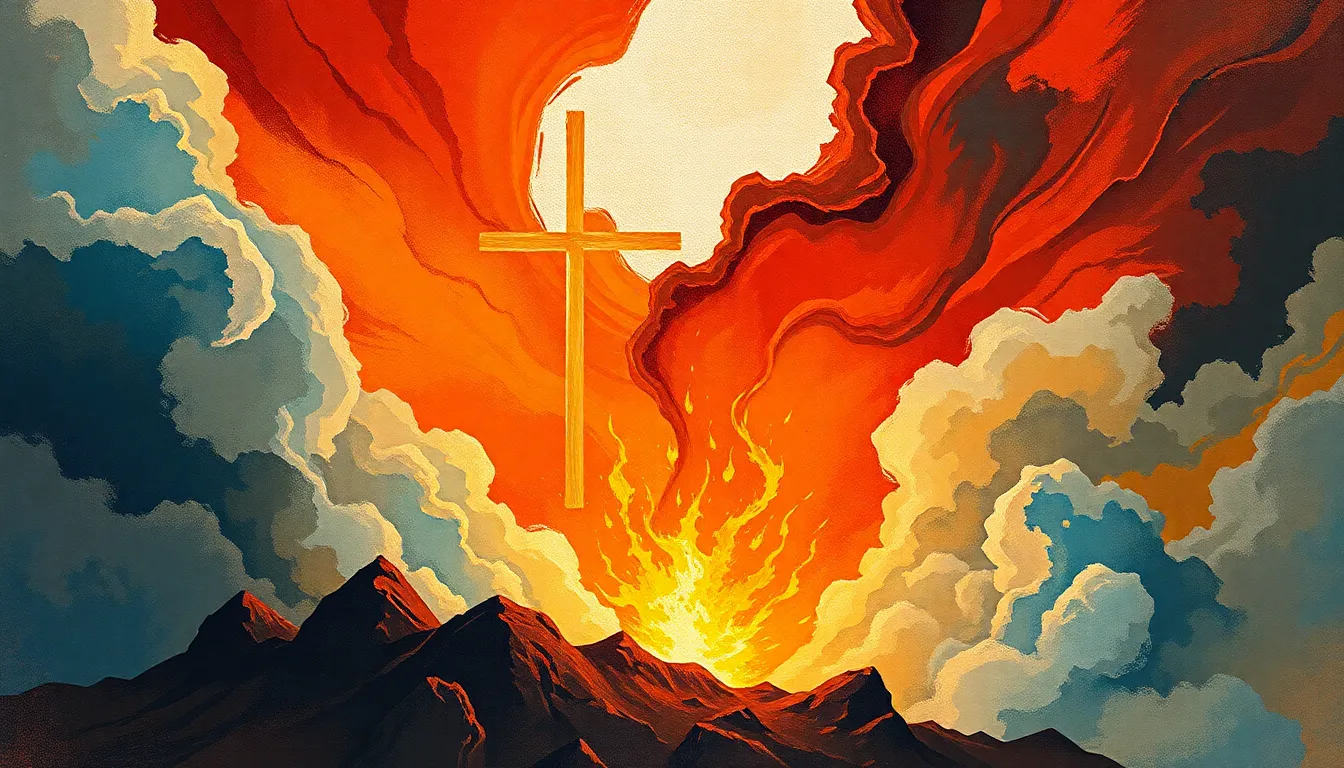
The real issue beneath the grace-works debate is the question of merit. Do we deserve God's salvation? Can we do anything to earn it? The consistent answer of the New Testament is no — the gulf between God's holiness and our sinfulness is too vast for any human effort to bridge. The only bridge is the cross.
But the cross does not leave us unchanged. The God who justifies us also sanctifies us. The Spirit who declares us righteous is the same Spirit who begins making us righteous in practice. Salvation is not just a legal verdict; it is the beginning of a transformation.
Understanding this removes both the pride of the self-righteous person who thinks they have earned God's approval and the paralysis of the person who never feels good enough. Neither pride nor paralysis is the appropriate response to the Gospel. Gratitude is. And gratitude, it turns out, is a far more powerful motivator for holy living than fear.
Living in the Tension
The Christian life is lived in the creative tension between "it is finished" and "work out your salvation with fear and trembling" (Philippians 2:12). Both are true simultaneously. The cross is complete; our transformation is ongoing. We rest in Christ's finished work; we cooperate with the Spirit's present work.
This is not confusion. It is the shape of the Christian life. We are, as Luther said, simultaneously justified and sinners — righteous in our standing before God, yet still being changed in our daily reality.
The debate between grace and works will never fully go away, because both truths need to be held together. Let them be. The point is not to resolve the tension but to live faithfully within it — trusting the grace that saved you, and responding to it with the life that grace makes possible.
Ready to test your knowledge?
Put what you've read into practice with a Bible quiz — free for every believer.
Build a daily reading habit
Follow a structured plan through the whole Bible — track your progress, day by day.
Gospel Genius Editorial Team
Gospel Genius Contributor
Gospel Genius is a Bible knowledge platform helping Christians grow deeper in Scripture through quizzes, daily devotions, reading plans, and study resources. Our contributors are believers passionate about making God's Word accessible to every person.
Learn more about Gospel Genius →