Daniel's Four Kingdoms: A Plain-Language Breakdown of Daniel 2 and 7
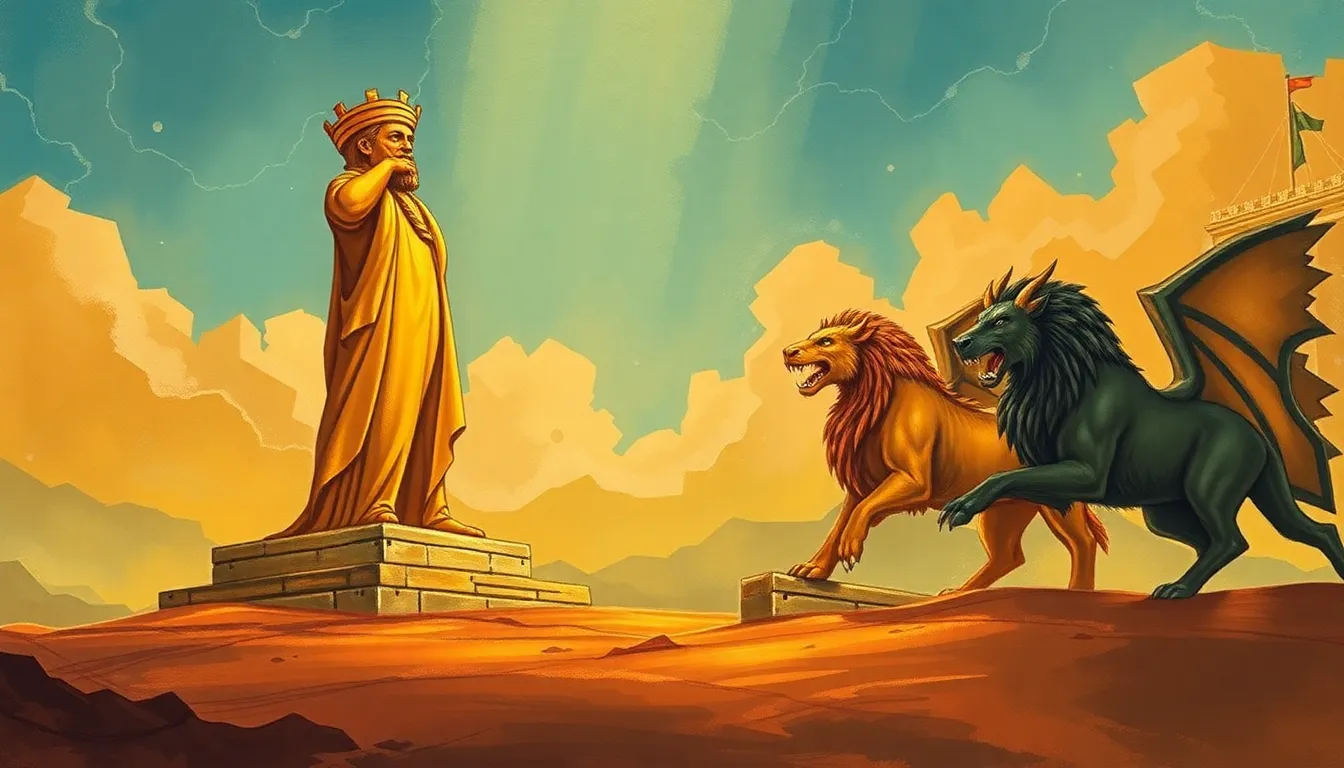
Nebuchadnezzar's statue and Daniel's four beasts are two of the most discussed visions in the Old Testament. Understanding what they meant to their original audience — and what they mean for us — requires some careful reading and a lot of historical context.
Few books of the Bible generate more interpretive controversy than Daniel. Commentators from ancient times to the present have argued about whether Daniel's visions refer to events that have already happened, events still future, or a mixture of both. The debate is genuinely complex.
But before diving into prophetic interpretation, there is a plain-reading question worth asking: What did these visions mean to the people who first received them? Daniel was a Jewish exile in Babylon in the sixth century BC. His visions were not written for twenty-first century newspaper readers — they were written for a community under imperial domination, wondering whether God was still in control. That context shapes everything.
Daniel 2: The Statue
In Daniel 2, Nebuchadnezzar has a dream that his own wise men cannot interpret. Daniel asks God for the answer and receives it. The dream is of an enormous statue made of different materials:
- Head — fine gold
- Chest and arms — silver
- Belly and thighs — bronze
- Legs — iron
- Feet and toes — iron mixed with clay
A stone not cut by human hands strikes the statue on its feet, destroys the whole thing, and grows into a mountain that fills the entire earth.
Daniel's interpretation to Nebuchadnezzar: "Thou art this head of gold. And after thee shall arise another kingdom inferior to thee, and another third kingdom of brass, which shall bear rule over all the earth. And the fourth kingdom shall be strong as iron" (Daniel 2:38–40).
Identifying the Kingdoms
The most natural historical reading — accepted across most traditions from earliest times — identifies the four kingdoms as Babylon, Medo-Persia, Greece, and Rome.
Babylon (gold): Daniel identifies Nebuchadnezzar's empire explicitly. Babylon was the dominant power of the 6th century BC.
Medo-Persia (silver): The empire that conquered Babylon in 539 BC under Cyrus the Great. Daniel 5:28 names Persia as the successor; the dual materials (silver for chest and arms) may reflect the Median-Persian dual kingship.
Greece (bronze): Alexander the Great conquered Persia between 334–323 BC. Daniel 8:21 explicitly identifies Greece as the kingdom symbolised by the goat that destroys the ram. The bronze that "bears rule over all the earth" fits Alexander's rapid conquest of the known world.
Rome (iron): Rome's iron character — crushing everything in its path — is vividly described in 2:40. The iron-and-clay feet have been interpreted variously as Rome's eventual division into Eastern and Western empires, or as a coalition of kingdoms at the end of history.
Daniel 7: The Four Beasts
Daniel 7 covers the same historical sequence from a different angle — Daniel's own vision rather than the king's dream — but with more vivid apocalyptic imagery and a heavier emphasis on judgment and the coming kingdom.
- Lion with eagle's wings — Babylon (the lion and eagle were both symbols of Babylon)
- Bear raised on one side, three ribs in mouth — Medo-Persia (raised on one side may indicate Persian dominance over the Medes; three ribs = three major conquests: Lydia, Babylon, Egypt)
- Four-headed leopard with four wings — Greece (the leopard's speed = Alexander's rapid conquest; four heads = the four kingdoms his empire split into after his death in 323 BC)
- Terrifying fourth beast with iron teeth — Rome (described as unlike anything before it, trampling and crushing)
The Little Horn
Out of the fourth beast come ten horns, and then a "little horn" that uproots three of the others and speaks great boasts against God. The most common historical identification is Antiochus IV Epiphanes, the Seleucid king who desecrated the Jerusalem temple in 167 BC and attempted to eradicate Jewish religious practice — the events celebrated at Hanukkah.
Many Christian interpreters see in the little horn a pattern that finds its ultimate fulfilment in a future figure the New Testament calls the Antichrist (2 Thessalonians 2:3–4; Revelation 13).
"I saw in the night visions, and, behold, one like the Son of man came with the clouds of heaven, and came to the Ancient of days, and they brought him near before him. And there was given him dominion, and glory, and a kingdom." — Daniel 7:13–14
The Stone and the Son of Man
Both visions end in the same place. In Daniel 2, the supernatural stone destroys all human kingdoms and becomes an eternal mountain. In Daniel 7, the Ancient of Days holds court, the fourth beast is destroyed, and "one like the Son of man" — Jesus' favourite self-designation in the Gospels — receives an eternal, universal kingdom.
This is the point of both visions. Human empires, regardless of their glory, are temporary. God's kingdom alone is permanent. The message for exiles in Babylon — and for any community under oppression in any age — is that the kingdoms that appear invincible are already written into the script as the ones that fall. The one who builds the eternal kingdom arrives in weakness, is rejected, but receives all authority.
Reflection: In your own life, what "kingdoms" — systems, institutions, powers — feel permanent and unshakeable? How does Daniel's vision reframe your relationship to those structures?
Ready to test your knowledge?
Put what you've read into practice with a Bible quiz — free for every believer.
Build a daily reading habit
Follow a structured plan through the whole Bible — track your progress, day by day.
El Shamarani
Gospel Genius Contributor
Gospel Genius is a Bible knowledge platform helping Christians grow deeper in Scripture through quizzes, daily devotions, reading plans, and study resources. Our contributors are believers passionate about making God's Word accessible to every person.
Learn more about Gospel Genius →