The Birth of the Anglican Church in Nigeria: A History
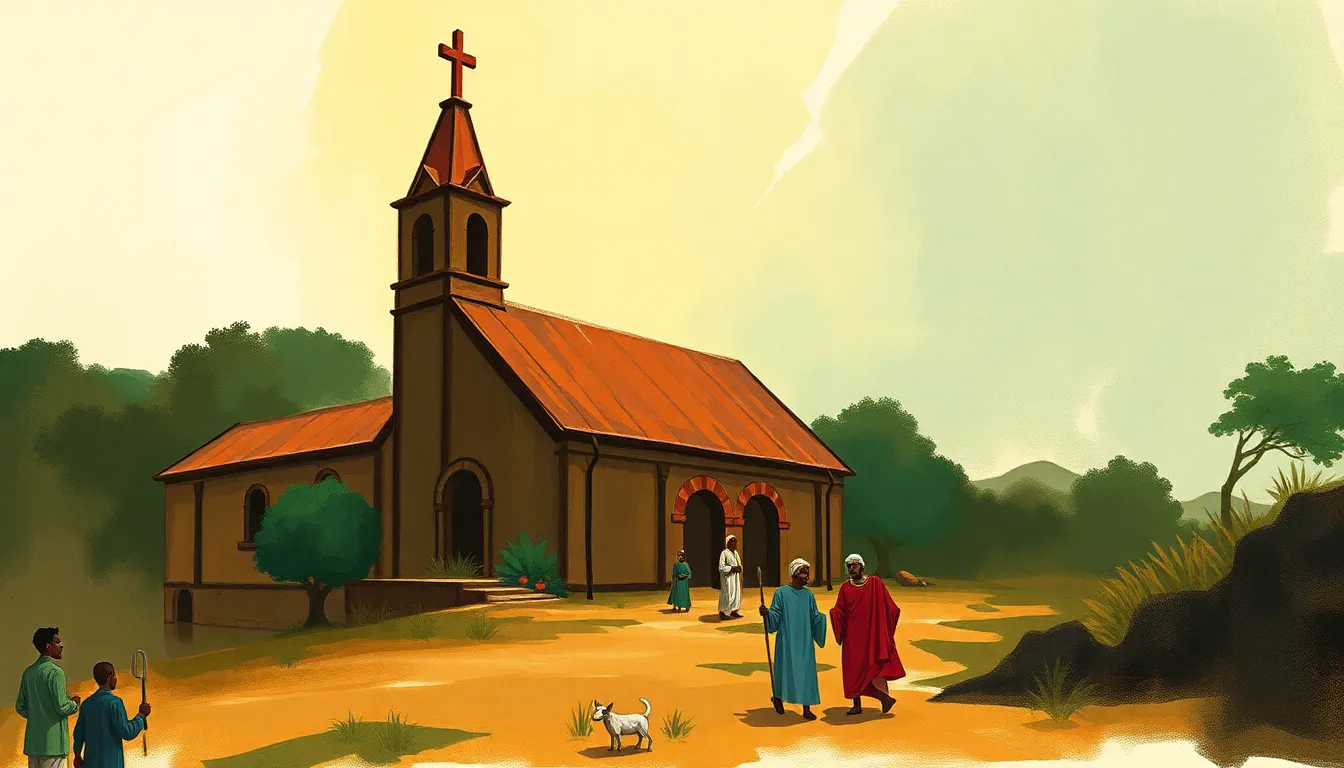
The Anglican Church of Nigeria today has over 18 million members, making it one of the largest Anglican provinces in the world. Its origins — in freed slaves, African evangelists, and colonial-era tensions — are a story of both triumph and conflict.
Today the Church of Nigeria (Anglican Communion) is one of the largest Anglican provinces on earth, with an estimated 18–20 million members spread across more than 160 dioceses. It is, by most measures, more theologically conservative and more numerically vibrant than its parent church in England. This is a remarkable outcome for a mission that started with two missionaries and a group of freed slaves.
The Freed Slave Seed: Freetown and the Yoruba Return
The story begins not in Nigeria but in Sierra Leone. After Britain abolished the slave trade in 1807, the Royal Navy began intercepting slave ships in the Atlantic and releasing their human cargo at Freetown, Sierra Leone. Among the tens of thousands of "Recaptives" settled at Freetown were large numbers of Yoruba — people captured in the wars and slave raids of early 19th-century Yorubaland.
In Freetown, many Recaptives encountered Christianity through the Church Missionary Society (CMS) schools and congregations. They were educated, baptised, and shaped by a Yoruba-inflected Anglicanism that was distinctly their own. Among them was Samuel Ajayi Crowther, who would become the first African Anglican bishop.
In the 1840s, many of these Yoruba Christians began returning to their homeland. They carried the gospel with them. These voluntary returning migrants — not European missionaries — were the first evangelists in much of Yorubaland. Henry Townsend, a CMS missionary who arrived in Abeokuta in 1843, found a community of returned Yoruba Christians already there. The church had preceded the official mission.
The CMS and the Abeokuta Mission
The CMS established its first permanent station at Abeokuta in 1846. Crowther joined the mission, translating, evangelising, and establishing congregations along the Niger River. By 1857 the mission had extended to the Niger Delta and beyond, with Crowther as its most effective evangelist.
The early Lagos church drew heavily on the Saro community — the name given to the Yoruba Recaptives from Sierra Leone (Saro being a corruption of "Sierra Leone"). They were educated, sophisticated, commercially active, and deeply Christian. They built churches, financed schools, and pushed for the ordination of African clergy.
The Bishopric of 1864
In 1864 Samuel Ajayi Crowther was consecrated at Canterbury Cathedral as Bishop of Western Equatorial Africa — the first African Anglican bishop. The ceremony was celebrated across the missionary world as evidence that Christianity could produce African leadership. Queen Victoria's chaplain officiated. The Archbishop of Canterbury laid on hands.
But the next twenty-five years would test the limits of the CMS's commitment to African leadership. As European missionaries multiplied in the Niger Territory, many brought with them the racial paternalism of late Victorian England. They questioned Crowther's authority, accused his clergy of moral failures, and eventually recommended in 1890 that the Niger Diocese be handed to European leadership.
Crowther, elderly and humiliated, died in January 1891. He was not replaced by another African bishop for decades. The episode left a deep wound in the relationship between African Christians and their European ecclesiastical sponsors.
"I was first a slave, then a student, then a soldier of the Cross, and now a bishop in the Church of God." — Samuel Ajayi Crowther
The Breakaway Movements and Independent African Christianity
The racial paternalism of the late 19th century CMS produced a predictable response: independent African Christianity. In 1891, the United Native African Church broke away from the CMS in Lagos, insisting that "Africa is to be governed and evangelised by Africans." In 1901 another group formed the Bethel African Church.
These breakaway movements were not rejections of Anglican theology — they kept liturgy, Scripture, sacraments, and the creeds. They were rejections of the colonial governance of the church. They established the principle, which would become normative in Nigerian Christianity, that African believers had the right and responsibility to govern their own ecclesiastical affairs.
From Diocese to Province
The Anglican Church of Nigeria became an autonomous province of the Anglican Communion in 1979, with its own Archbishop and Primate. The late 20th and early 21st centuries saw explosive growth as Nigeria's population expanded and the charismatic renewal of the 1970s–1990s revitalised Anglican congregations.
Under the leadership of Archbishop Peter Akinola (1999–2010) and subsequently Archbishop Nicholas Okoh, the Church of Nigeria became a prominent voice in the global Anglican debate over human sexuality and Biblical authority. Their positions, aligned with traditional Anglican teaching, positioned the Church of Nigeria as a champion of conservative orthodoxy within the Communion — a remarkable reversal from a century earlier, when the church needed external validation just to ordain its own bishop.
A Church That Belongs to Nigeria
The Anglican Church of Nigeria today is a thoroughly Nigerian institution. Its worship is conducted in Yoruba, Igbo, Hausa, and dozens of other languages. Its theologians engage questions of African cosmology, spiritual warfare, and Christian identity with sophistication that the Freetown missionaries of the 1840s could not have imagined.
The freed slave who carried a worn Bible back to Abeokuta could not have foreseen the 18-million-member communion his children would build. But God's purposes have a long horizon.
Reflection: The Church of Nigeria was built by ordinary people — freed slaves, returning migrants, local evangelists — not just famous leaders. What role do you play in building the local church, and who might look back at your faithfulness a century from now?
Ready to test your knowledge?
Put what you've read into practice with a Bible quiz — free for every believer.
Build a daily reading habit
Follow a structured plan through the whole Bible — track your progress, day by day.
El Shamarani
Gospel Genius Contributor
Gospel Genius is a Bible knowledge platform helping Christians grow deeper in Scripture through quizzes, daily devotions, reading plans, and study resources. Our contributors are believers passionate about making God's Word accessible to every person.
Learn more about Gospel Genius →