How God Healed My Marriage Through the Story of Hosea
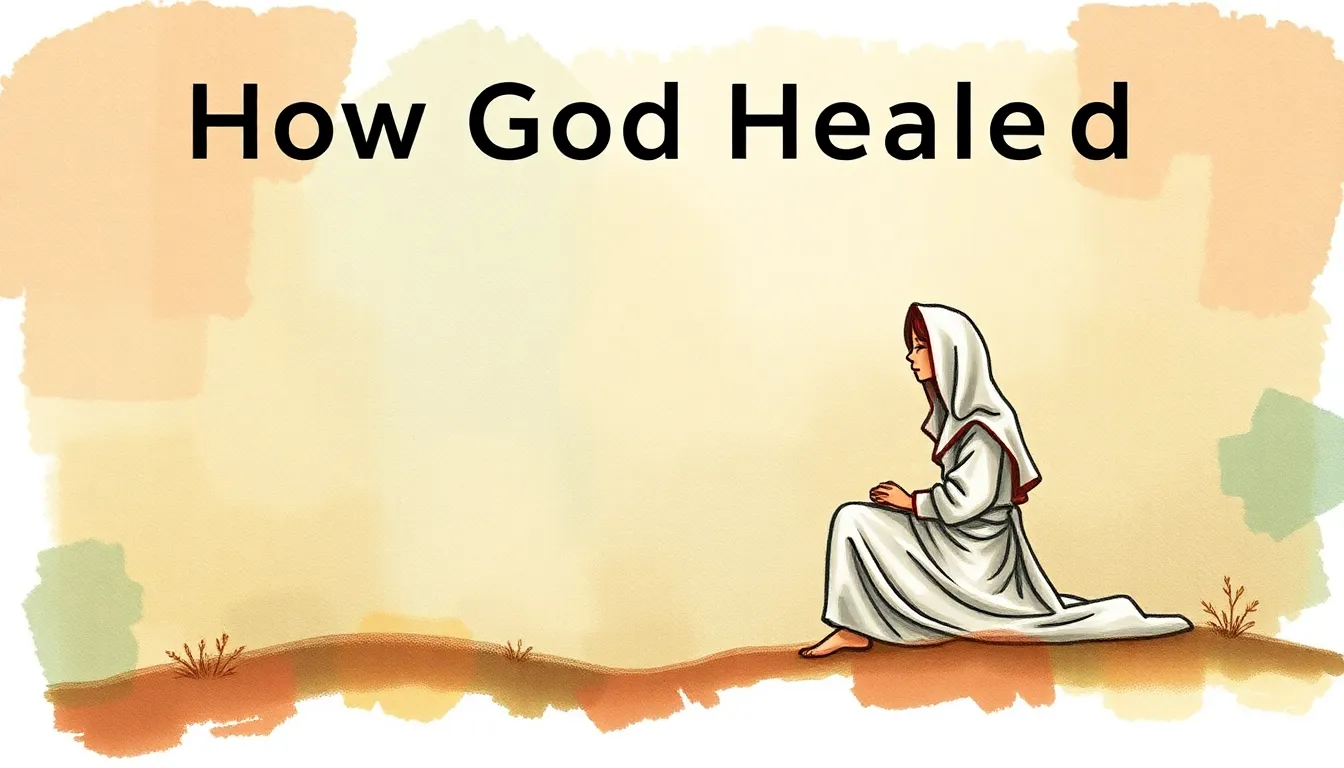
One woman's account of how the book of Hosea became the instrument of healing in a marriage she had privately declared dead. A story of grace, grief, and restoration.
I will not use our names, and I will not use our church's name, because this belongs to us and to God — not to public curiosity. But the story of how the book of Hosea became the instrument of that healing is something I have been asked to share for years, and I am finally ready.
**What Happened**
My husband did not have an affair in the physical sense. What he did was worse in some ways and easier to deny: he gave his heart, his energy, his creative attention, and his emotional presence to his career, to his friendships, to his hobbies — to everything except me and our children. I was functionally alone in the marriage. The bills were paid. The house was maintained. He was physically present at dinners and church services. But I was invisible.
I am not blameless. In response to his absence, I had become bitter, sharp-tongued, and contemptuous — the precise qualities most likely to push him further away. We were locked in a cycle that neither of us had chosen and neither of us knew how to break.
**The Night With Hosea**
It was a midweek evening in July. I could not sleep. I went to the sitting room, opened my Bible at random — not a practice I recommend, but God can use it — and landed in Hosea 2.
I had read Hosea before, academically. I knew it was about Israel's spiritual adultery against God, and about Hosea's commanded marriage to an unfaithful woman as a living metaphor of that spiritual reality. I had never read it as a word addressed to me.
That night, verses 14-16 reached into my chest: "Therefore, behold, I will allure her, and bring her into the wilderness, and speak comfortably unto her. And I will give her her vineyards from thence, and the valley of Achor for a door of hope: and she shall sing there, as in the days of her youth, and as in the day when she came up out of the land of Egypt. And it shall be at that day, saith the LORD, that thou shalt call me Ishi" — which means "my husband."
I am not a mystical person. I do not typically receive verses as personal messages. But I knew, with a certainty I cannot explain, that this was addressed to me — not just as a member of God's covenant people, but as a wife who had lost her marriage and her song. God was saying: I am going to take you through the wilderness. It will not be the destination; it will be the door. And on the other side, you will find what you thought you had lost.
I wept for an hour. Not from sadness — from something closer to recognition. The anger that had become my default emotional state was replaced, not gradually but quite suddenly, by something that felt like grief without bitterness. I could grieve the loss of the marriage I had hoped for without hating the man I was still married to.
**What Changed**
I am not going to present this as a simple before-and-after story, because that would not be true to how God works. What changed that night was not our marriage. It was me. The posture of my heart shifted from demanding what was owed to me to grieving what we had both lost.
My husband noticed the change in me within days — not because I told him anything, but because contempt, when it leaves, leaves a visible absence. We had a conversation six weeks later that we should have had nine years earlier. It was difficult. It was honest. And it was the beginning of the wilderness that Hosea had described — a period of about fourteen months during which we went to counselling, separately and together, and I read through Hosea approximately twenty times.
The valley of Achor, by the way, is where Achan was stoned for his sin in Joshua 7. It was a place of judgement and death. Hosea says it becomes a door of hope. That is exactly how I would describe our marriage's low point: a place of death that God used as an entrance to something better.
**What I Want You to Know**
I am not a marriage counsellor, and this article is not a formula. Every marriage is different. Some situations are genuinely unsafe, and leaving is the right and necessary response. I am not speaking to those situations.
I am speaking to the person who is in a marriage that has gone cold and distant — who has concluded, as I had, that the warmth will never return. Hosea does not promise an easy path. He promises a God who allures and speaks comfort and gives back what the locusts have eaten. That God is as active today as he was in the eighth century BC.
My husband and I have been married for twenty-three years now. We are not the same people who nearly ended it. We are, in many ways, better — because the wilderness, as Hosea said, turned out to be a door.
Ready to test your knowledge?
Put what you've read into practice with a Bible quiz — free for every believer.
Build a daily reading habit
Follow a structured plan through the whole Bible — track your progress, day by day.
Gospel Genius Editorial Team
Gospel Genius Contributor
Gospel Genius is a Bible knowledge platform helping Christians grow deeper in Scripture through quizzes, daily devotions, reading plans, and study resources. Our contributors are believers passionate about making God's Word accessible to every person.
Learn more about Gospel Genius →